
Rediscovering Vinyl Preview
What to expect from Paul McCartney's new upcoming album
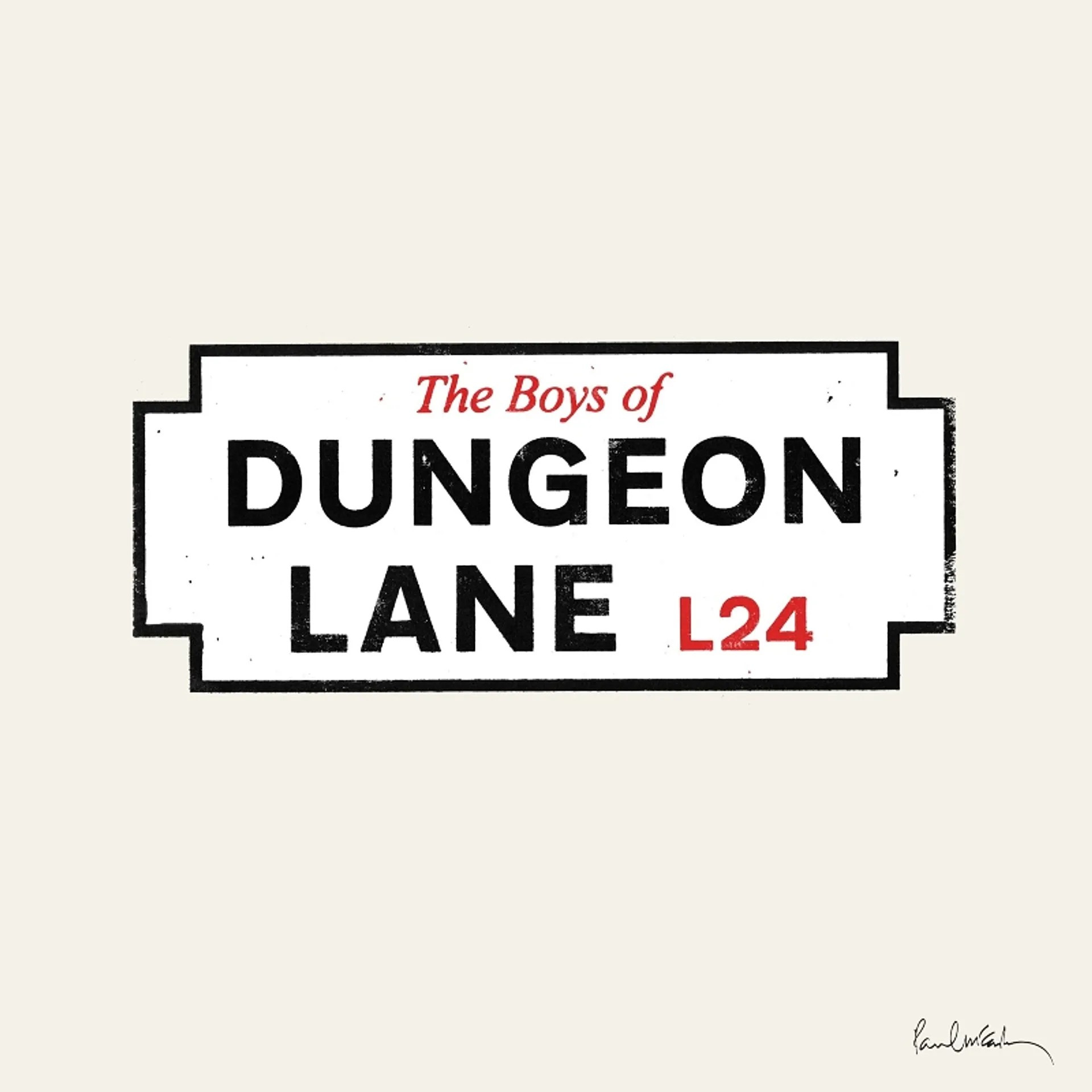
The Boys of Dungeon Lane arrives on May 29, and the early details already tell a clear story. This is McCartney writing from memory, not mythology. The title alone signals that this one is personal. It points straight back to Speke, to the Liverpool streets where he first learned how to see the world. He is looking back at the years before the Beatles, before fame, before the noise. The lead single, “Days We Left Behind,” is quiet and reflective, built around the kind of emotional honesty he reaches when he strips everything down.
A Return to the Landscape That Shaped Him
Dungeon Lane is a real place. It is a stretch of road near the Mersey where McCartney spent long afternoons as a kid. He walked there, watched birds there, and let his imagination wander. Naming an album after it is a signal that he is ready to talk about the parts of his life he has never fully put into songs.
“The album title comes from a lyric in the track ‘Days We Left Behind.’ I was thinking just that, about the days I left behind and I do often wonder if I’m just writing about the past, but then I think how can you write about anything else?” -Paul McCartney
The Sound of a Late‑Career Artist With Nothing Left to Prove
McCartney recorded much of the album himself, the way he did on McCartney, McCartney II, and McCartney III. Producer Andrew Watt adds energy and color, but the core of the record is McCartney alone in a room, following instinct. At 83, his voice carries a different kind of weight. It is weathered, expressive, and honest, and the early descriptions suggest the album leans into that instead of hiding it.
If McCartney III was the sound of a man tinkering his way through lockdown, The Boys of Dungeon Lane feels like the sound of a man taking stock.

What We Learned From McCartney III
McCartney III was a rare late‑career moment. It was intimate and handmade, full of the small imperfections that make a record feel human. You could hear the room. You could hear the decisions. You could hear the way his voice has changed, not as a limitation but as a kind of truth.
That album was McCartney alone with his instincts. No pressure. No expectations. Just a musician following the thread wherever it led. It had the charm of a workshop project, but it also had emotional weight. Songs like “Women and Wives” and “Deep Deep Feeling” showed a writer willing to sit with the harder parts of aging.
McCartney III is more autobiographical than it first appears. It revealed where Paul was in his life. You almost had to understand his history, his losses, and the psychology of aging to hear what he was really saying. In that sense, McCartney III feels like a runway for The Boys of Dungeon Lane, which sounds like it will be more overtly autobiographical. The quiet self‑reflection of III has opened the door for a record that names the places and memories directly.
Enter Andrew Watt
This is where the new album will diverge from III in a meaningful way. Andrew Watt is not a passive producer. He is hands‑on, energetic, and unafraid to push artists into bolder territory. His work with the Rolling Stones, Elton John, and Iggy Pop shows a clear pattern.
1. He brings immediacy
Watt likes mixes that feel close and alive. Vocals sit forward. Guitars have bite. Drums hit with purpose.
2. He adds structure without sanding off personality
Legacy artists often drift toward loose, comfortable arrangements. Watt tightens things up and gives the songs a spine.
3. He encourages risk
Watt is a guitarist first, and he tends to pull more energy out of the artists he works with. If McCartney brings even a hint of the grit from “Slidin’,” Watt will amplify it.
4. He respects the voice as it is
He does not try to make older singers sound young. He frames the voice so it feels intentional. He did this with Elton. He did it with Jagger. He will do it with McCartney.
So What Does That Mean for Dungeon Lane
It means the album will not sound like McCartney III. It will not have that homemade quiet. It will not drift or meander. Instead, expect something more focused, more vivid, and more grounded in the emotional clarity that comes with age.
The lead single already hints at this. It is reflective, but it is not fragile. It has shape. It has intention. It feels like a memory. It is available for streaming now if you want to give it a listen.
The tracklist points in the same direction. Titles like “Lost Horizon,” “Ripples in a Pond,” and “First Star of the Night” suggest a record built around distance and perspective. These are not songs about fame or legacy. They are songs about the years before all of that.
Why This Album Matters
McCartney has spent most of his career writing forward. This is the first time he has written an entire album by looking back at the boy he was before the world knew his name. Perhaps it’s nostalgia. But it’s also reflection. It is the kind of writing an artist can only do when he has lived long enough to understand what the early years meant.
With Watt shaping the sound, the album will likely carry more energy than III, but with the same emotional honesty. It will be sharper, more immediate, and more intentional. It will not replace McCartney III. It will sit beside it as the next chapter in a late‑career run that has been far more interesting than anyone expected.
As more details emerge, we will dig into the songs themselves and how they fit into the long arc of McCartney’s writing. For now, this is the shape of what is coming. And it feels like a record worth paying attention to.

Andrew Watt strikes again! What he achieved with the last two Ozzy records was nothing short of miraculous. Any bets on how many tracks Chad Smith plays drums on? 😂